Galvalume vs Galvanised Sheeting for PEB Roofs: Which Lasts Longer?
Galvalume sheeting is steel coated with an alloy of about 55% aluminium and 45% zinc; galvanised sheeting is steel coated with zinc alone. In most atmospheres Galvalume lasts longer, because the aluminium forms a stable barrier while the zinc still protects scratches and edges, and published exposure data put its life at roughly two to four times that of galvanised sheet of the same coating mass. Galvanised sheet protects cut edges and scratches better and tolerates contact with wet concrete, mortar and alkaline runoff, which Galvalume does not. For a PEB roof in India the usual choice is colour-coated Galvalume, AZ150 to IS 513; galvanised (IS 277, 120 GSM) still suits sheltered, dry or alkaline environments and budgets where the roof will be repainted. The coating mass, the paint system and the detailing decide the life as much as the metal does.
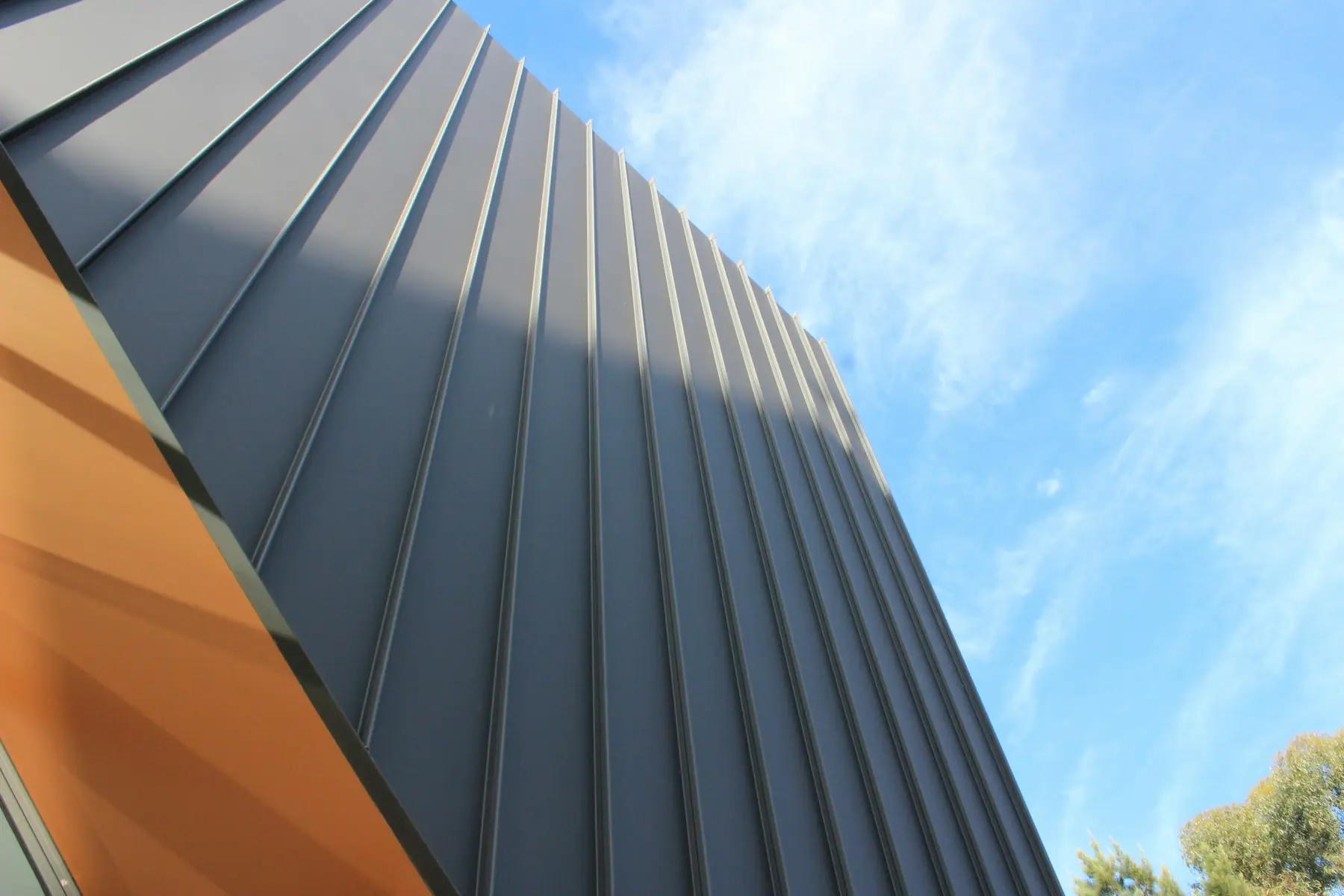
What Galvalume and galvanised sheeting are
Both are cold-rolled steel sheet, usually 0.4 to 0.8 mm thick for roofing, passed through a molten metal bath so that a thin metallic coating bonds to both faces. The difference is the bath. Galvanised sheet is coated with zinc; the Indian standard is IS 277, and the coating is specified by its total mass on both faces, such as 120 GSM (grams per square metre) or Z275. Galvalume, a trade name that has become the generic word, is coated with an alloy of about 55% aluminium, 43.5% zinc and 1.5% silicon; it is covered by IS 15961 and, for colour-coated sheet, specified alongside IS 513, with the coating mass given as AZ150 or AZ200. Either base can be left bare or given a colour coat of paint on top, and for a PEB roof in India it almost always is.
The two coatings protect steel in different ways. Zinc is sacrificial: it corrodes in preference to the steel, so a scratch or a cut edge is protected by the zinc around it until that zinc is used up. Aluminium is a barrier: it forms a stable oxide and corrodes very slowly, but it does not protect a bare edge. Galvalume combines them. The aluminium-rich part of the coating gives the long, slow barrier life, and the zinc-rich part gives enough sacrificial protection to look after edges and scratches, though less than pure zinc would.
Which lasts longer?
In most environments, Galvalume. Steel producers’ long-term exposure programmes, run over decades at rural, industrial, marine and severe marine sites, consistently show 55% aluminium-zinc sheet losing coating far more slowly than galvanised sheet of the same coating mass, with a service life roughly two to four times longer before red rust appears on the flat of the sheet. The advantage is largest in rural and mild industrial atmospheres and holds in marine ones. This is why Galvalume has become the default base for colour-coated roofing in India and why warranties on Galvalume roofing are generally longer.
Galvanised sheet keeps three advantages. First, cut edges and scratches: pure zinc protects them more strongly, so a roof with many site cuts, penetrations and unsealed edges can show edge rust sooner on Galvalume than on galvanised, even while the flat of the Galvalume sheet is in better condition. Second, alkaline contact: wet concrete, mortar, cement dust and alkaline runoff attack the aluminium in Galvalume and strip the coating, so sheet that touches a parapet, a concrete gutter or a cement-plastered wall should be galvanised or isolated. Third, animal confinement: ammonia from poultry and dairy sheds attacks aluminium-zinc coatings, and galvanised sheet is the usual choice there.
Coating
- Galvalume (55% Al-Zn)
- About 55% aluminium, 43.5% zinc, 1.5% silicon
- Galvanised (Zn)
- Zinc
Indian standards
- Galvalume (55% Al-Zn)
- IS 15961; colour-coated to IS 513 (AZ150 at DSI)
- Galvanised (Zn)
- IS 277; colour-coated 120 GSM at DSI
How it protects
- Galvalume (55% Al-Zn)
- Barrier from aluminium oxide plus some sacrificial zinc
- Galvanised (Zn)
- Sacrificial zinc
Life on the flat of the sheet
- Galvalume (55% Al-Zn)
- Roughly two to four times galvanised at equal coating mass in published exposure data
- Galvanised (Zn)
- Shorter; depends heavily on coating mass
Cut edges and scratches
- Galvalume (55% Al-Zn)
- Protected, but less strongly; seal edges
- Galvanised (Zn)
- Protected strongly by surrounding zinc
Wet concrete, mortar, alkaline runoff
- Galvalume (55% Al-Zn)
- Attacked; isolate or avoid
- Galvanised (Zn)
- Tolerates
Coastal and industrial atmospheres
- Galvalume (55% Al-Zn)
- Good; the usual choice
- Galvanised (Zn)
- Acceptable with heavy coating and paint; shorter life
Animal sheds (ammonia)
- Galvalume (55% Al-Zn)
- Not recommended
- Galvanised (Zn)
- Usual choice
Heat reflection, bare
- Galvalume (55% Al-Zn)
- Higher; stays brighter longer
- Galvanised (Zn)
- Lower; dulls as zinc weathers
Cost
- Galvalume (55% Al-Zn)
- Somewhat higher per sheet
- Galvanised (Zn)
- Lower
Repainting
- Galvalume (55% Al-Zn)
- Rarely needed within design life
- Galvanised (Zn)
- Expected within design life for bare sheet
| Factor | Galvalume (55% Al-Zn) | Galvanised (Zn) |
|---|---|---|
| Coating | About 55% aluminium, 43.5% zinc, 1.5% silicon | Zinc |
| Indian standards | IS 15961; colour-coated to IS 513 (AZ150 at DSI) | IS 277; colour-coated 120 GSM at DSI |
| How it protects | Barrier from aluminium oxide plus some sacrificial zinc | Sacrificial zinc |
| Life on the flat of the sheet | Roughly two to four times galvanised at equal coating mass in published exposure data | Shorter; depends heavily on coating mass |
| Cut edges and scratches | Protected, but less strongly; seal edges | Protected strongly by surrounding zinc |
| Wet concrete, mortar, alkaline runoff | Attacked; isolate or avoid | Tolerates |
| Coastal and industrial atmospheres | Good; the usual choice | Acceptable with heavy coating and paint; shorter life |
| Animal sheds (ammonia) | Not recommended | Usual choice |
| Heat reflection, bare | Higher; stays brighter longer | Lower; dulls as zinc weathers |
| Cost | Somewhat higher per sheet | Lower |
| Repainting | Rarely needed within design life | Expected within design life for bare sheet |
Coating mass matters more than the name
The question that decides the roof is not Galvalume or galvanised but how much coating is on it. Coating mass is specified by the total weight of metal on both faces: AZ150 means 150 grams of aluminium-zinc per square metre, Z275 means 275 grams of zinc, 120 GSM means 120 grams of zinc. A thin coating of either metal fails early; a heavy coating of either lasts. The lowest quotation for a PEB roof usually wins by thinning the coating, moving from AZ150 to AZ70 or from Z275 to Z120 without telling you, and the difference shows after the first few monsoons. Ask for the coating designation in writing and for the mill test certificate that proves it. DSI roofs are colour-coated Galvalume to AZ150 on S550 high-tensile steel, or colour-coated galvanised to 120 GSM to IS 277 where that is specified.
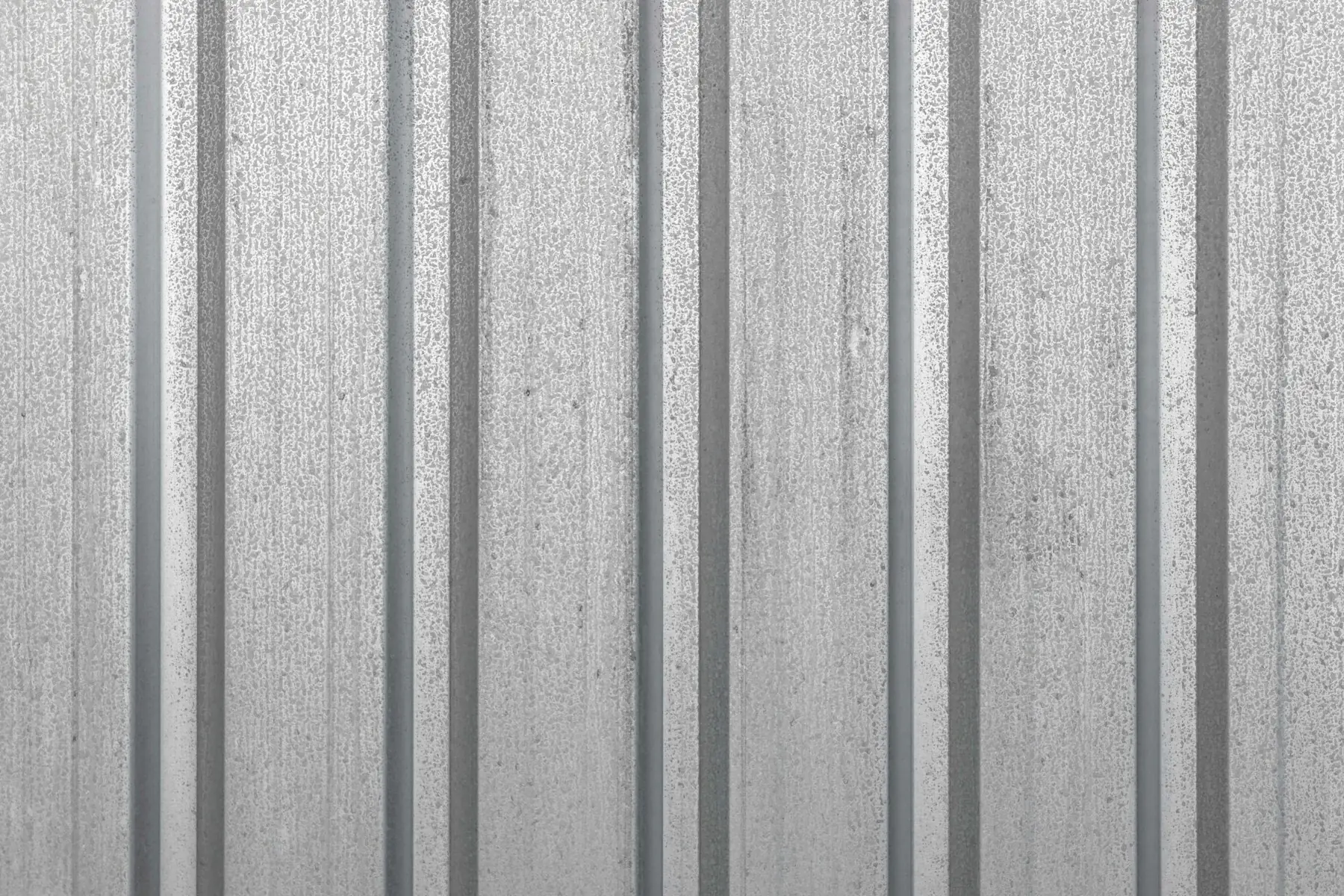
What the colour coat adds
Most PEB roofs are colour-coated: a primer and a paint topcoat baked onto the metallic coating at the mill. The paint is the first line of defence, the metallic coating is the second and the steel is what both protect. Paint systems are graded by their resin: regular modified polyester (RMP) for ordinary exposure, silicone modified polyester (SMP) for better gloss and chalk resistance, and PVDF for the longest colour life in severe exposure. On a Galvalume base the paint and the alloy together give the longest life; on a galvanised base the paint extends the life of the zinc considerably. Colour also changes the roof’s heat: light colours reflect more, which matters in Gujarat, and some colour coats are formulated as cool roofs.
Detailing decides the life as much as the metal
Roofs rarely fail across the flat of the sheet. They fail at the edges, the laps, the fasteners and the places where water sits. A cut edge that is not sealed, a lap without sealant, a screw with a different metal in its head, a gutter that holds water against the sheet or a parapet that drips cement onto it will finish a Galvalume roof as surely as a galvanised one. The rules are the same for both: seal or cap cut edges, lap in the direction of water flow with sealant where the slope is low, use fasteners with compatible coatings and sealing washers, keep dissimilar metals apart, drain every surface and keep the sheet off wet concrete. Standing seam roofing takes this further by removing the through-fasteners from the sheet altogether.
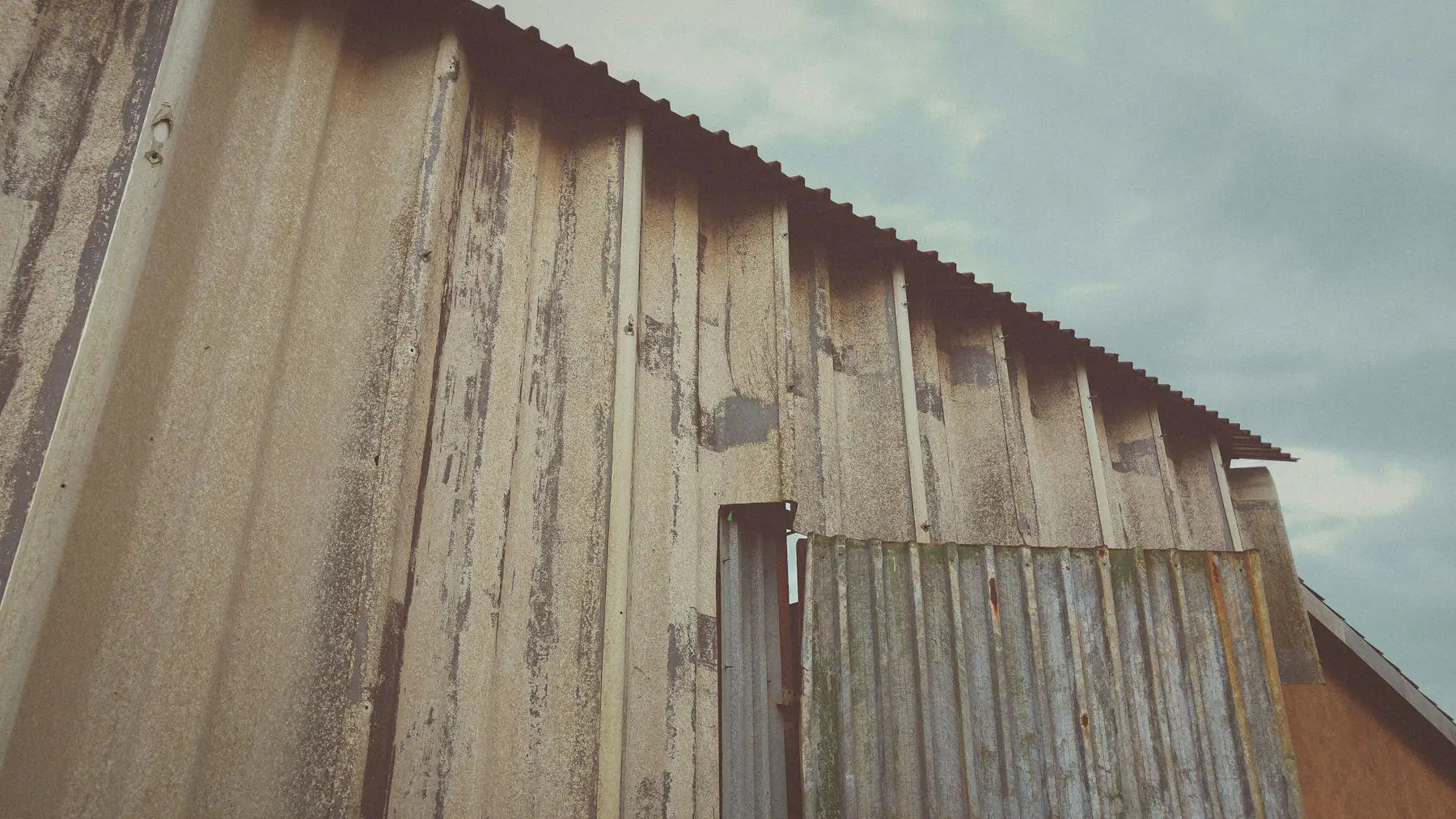
Which to choose for your PEB roof
- Factories and warehouses in most of Gujarat and India: colour-coated Galvalume, AZ150, on high-tensile steel. The default for a reason.
- Coastal and industrial sites, from Surat and Dahej to Kutch: colour-coated Galvalume with a better paint system (SMP or PVDF), sealed edges, coated fasteners and good drainage; consider standing seam for the roof.
- Sheds where the sheet meets concrete, mortar or cement dust, or where alkaline runoff crosses the roof: galvanised at those details, or isolate the Galvalume from the alkaline surface.
- Poultry, dairy and other animal sheds: galvanised, with a paint system against ammonia.
- Sheltered, dry interiors and short-life or budget buildings that will be repainted: colour-coated galvanised to 120 GSM is sound and cheaper.
- Either way: specify the coating mass, demand the mill test certificate and get the detailing right.