How to Select the Right PEB Manufacturer in India
The right PEB manufacturer in India is one that engineers the building for your site and your operation, fabricates it in its own factory with records at every stage, erects it with its own team, and hands over a building with the drawings and certificates to prove it. Judge a manufacturer on engineering capability, factory and machinery, material and quality records, relevant experience, erection capability, drawings, programme, quotation transparency, warranty and after-sales support, and location. Visit the works, speak to past clients, and compare quotations only on a level specification.
Why the manufacturer decides the building
A pre-engineered building is designed, fabricated and erected by one company, which is its great advantage and its great risk. When the manufacturer is good, the frame is right for the site, the steel is right for the drawing, the erection follows the sequence and the building is handed over on the date with the records. When the manufacturer is not, every one of those goes wrong at once, and the owner finds out after the steel is cut. India now has hundreds of companies calling themselves PEB manufacturers, from integrated works with engineering, fabrication and erection under one roof to traders who buy sections and subcontract everything else. This guide is how to tell them apart.
What a PEB manufacturer in India actually does
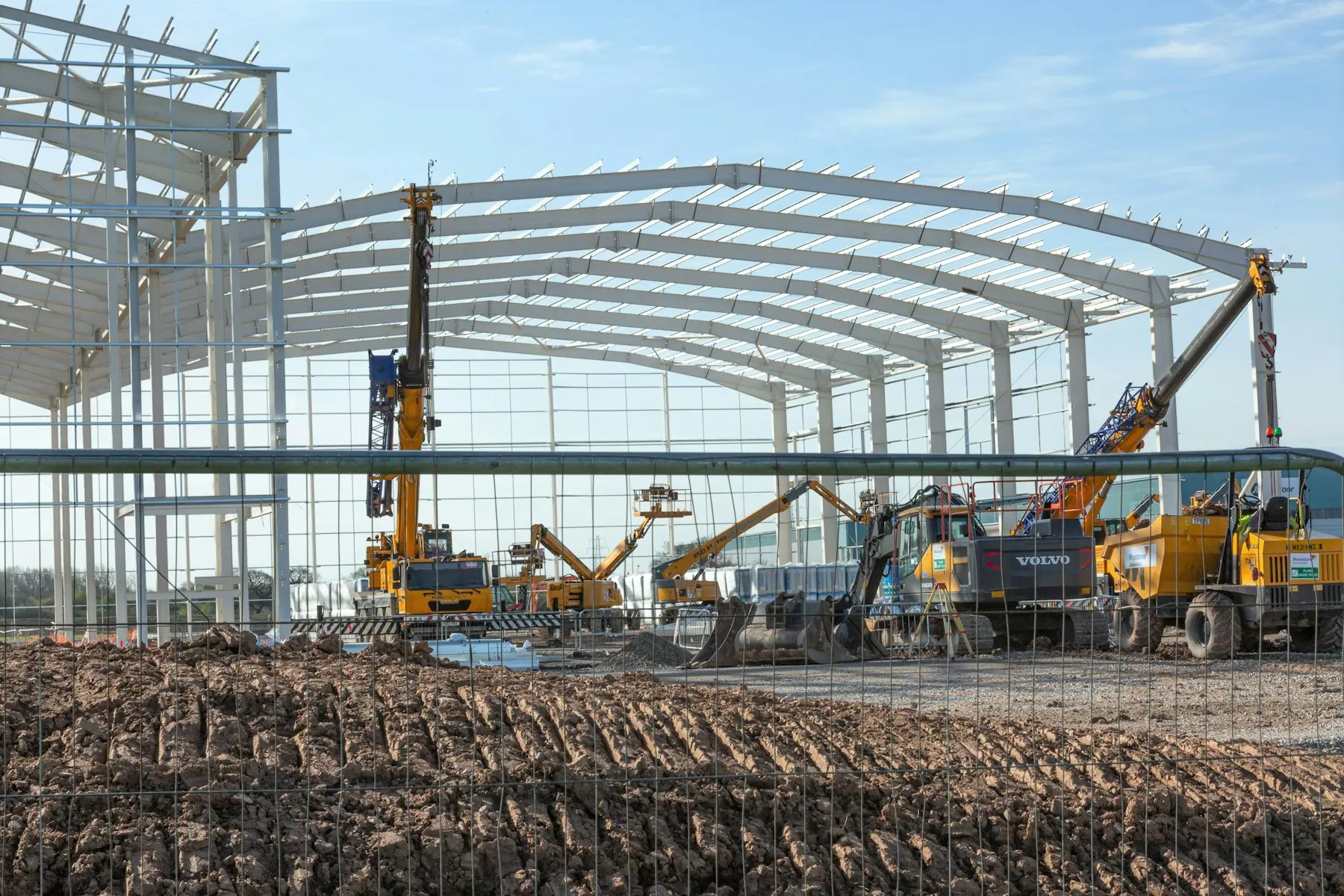
A full PEB manufacturer does four things. It engineers the building: a structural engineer designs the frames for the site and the operation to the Indian codes, and a detailer draws every member for the shop. It fabricates the building: plate is cut, welded, drilled, blasted and painted into numbered members, and purlins, girts and sheeting are roll-formed, in the manufacturer’s own factory. It supplies the whole system: frames, secondary members, cladding, insulation, ventilators, doors, gutters and bolts, from one source to one drawing. And it erects the building, with its own crew and supervising engineer, in a planned sequence, and hands it over against a checklist.
Many companies in the market do fewer than four. A fabricator makes steel to someone else’s drawings. A trader sells a building it neither designs nor makes. An erection contractor puts up steel it did not fabricate. Each can be competent, but each leaves a gap in responsibility that the owner ends up filling. The first question to ask any PEB manufacturer in India is which of the four it does itself.
The 10 things to check before choosing a PEB manufacturer
The ten criteria below, in roughly the order they decide the outcome, are what separate a reliable PEB manufacturer from a cheap one. Each has a question you can ask and an answer you can check.
1. Engineering capability
The frame is only as good as the engineering behind it. Ask whether the manufacturer has its own structural engineers or buys design from outside, which software they analyse in, and which codes they design to: IS 800 for the steel, IS 875 Part 3 for wind, IS 1893 for seismic loads, and the crane and collateral loads of your operation. Ask for the design basis of a recent building: the wind speed, the seismic zone, the soil bearing capacity and the deflection limits. A manufacturer who answers with a rate per square foot instead of a wind speed is not engineering your building.
2. The factory and its machinery
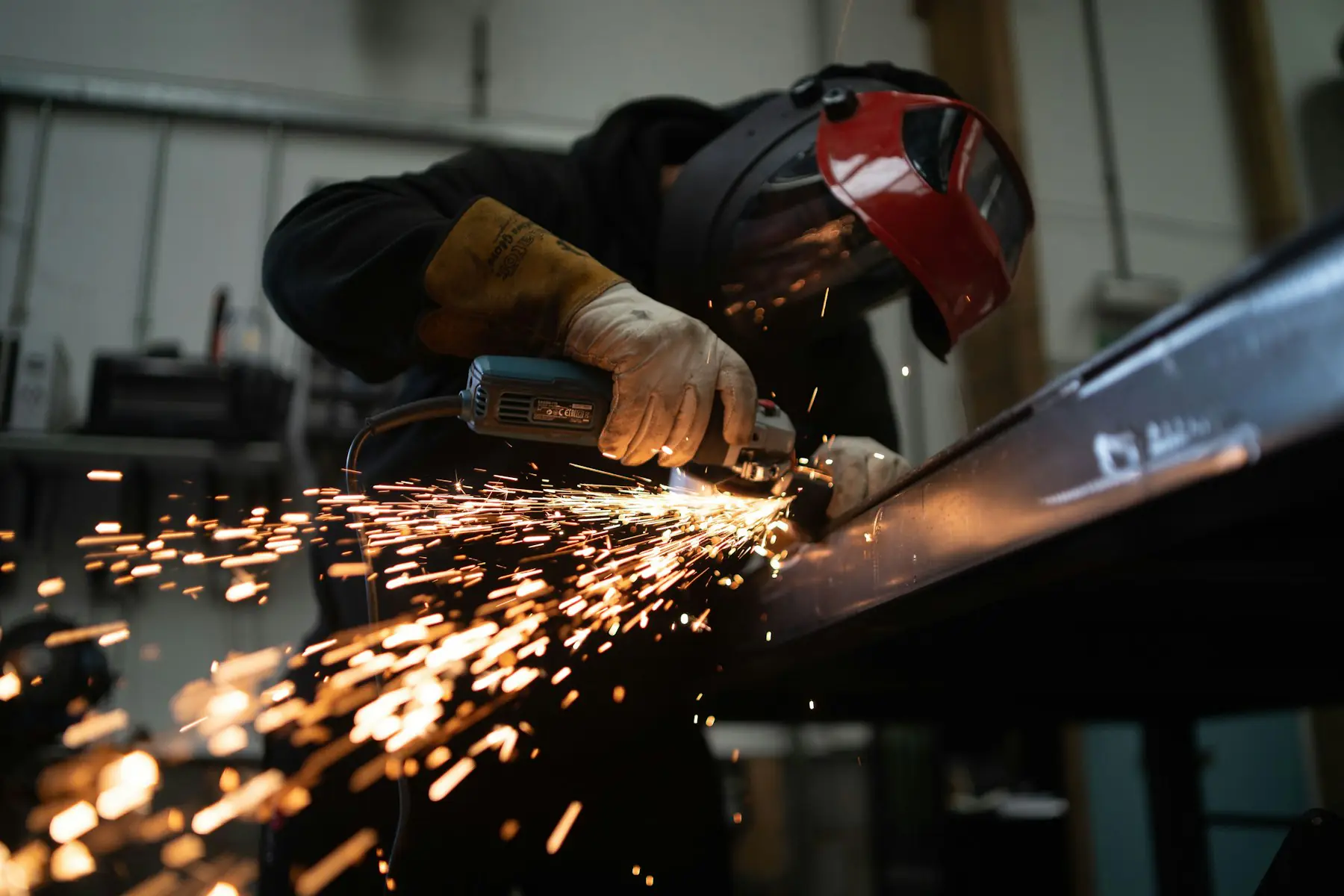
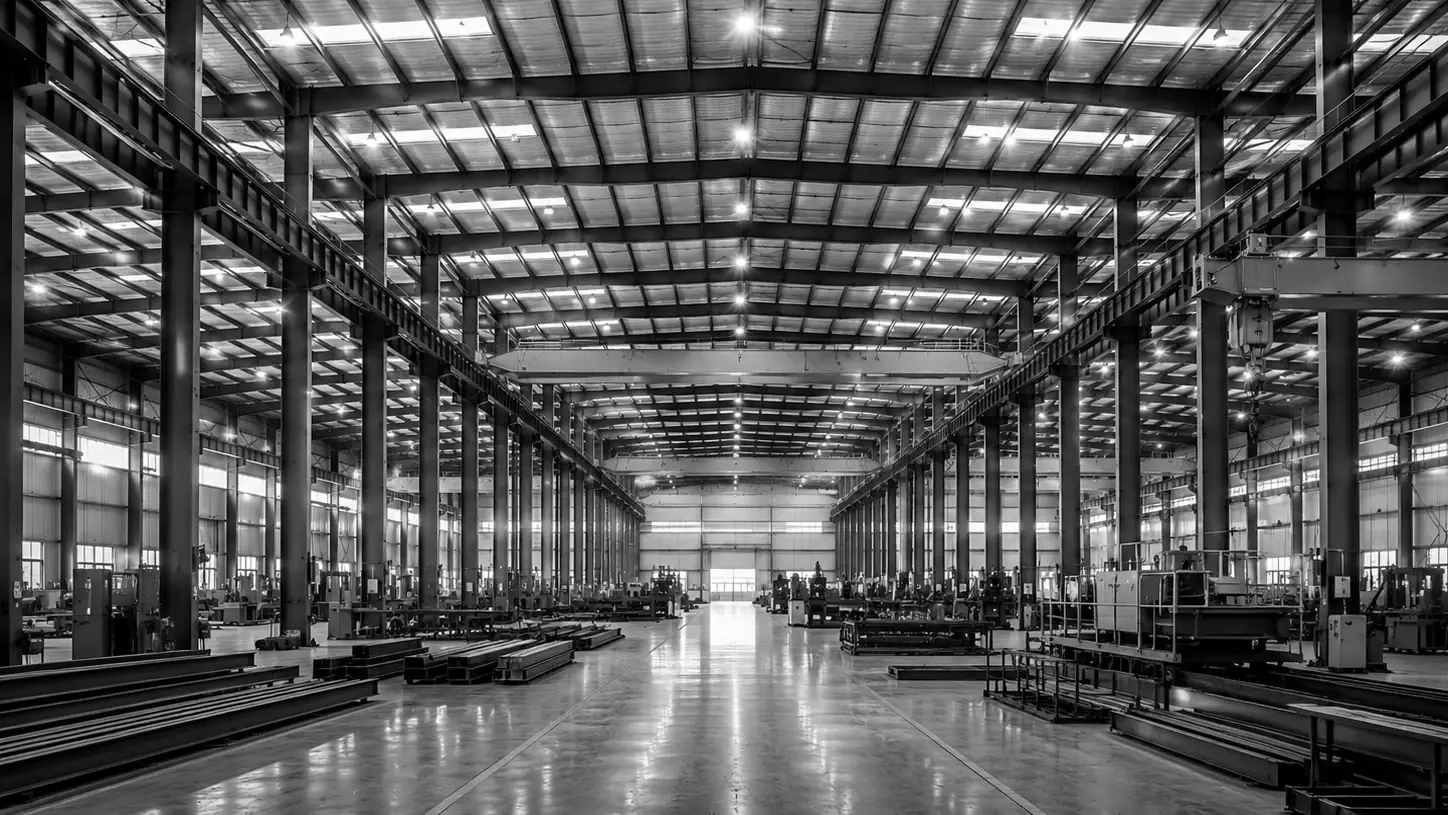
A PEB is a factory product, so the factory is what you are buying. Ask where it is and go and see it. Look for CNC plasma cutting and shearing for the plate, drilling or punching to the detailing model, an automatic pull-through welding line for the built-up sections, roll-forming lines for purlins, girts and sheeting, and shot blasting and painting before dispatch. Ask the monthly capacity in tonnes and how much of it is committed, because a full shop is where programmes slip. A manufacturer without a shop of its own is a trader, whatever the brochure says.
3. Material and quality records
Ask which plate grade the frames are made from and which sheeting the roof uses, and ask to see the mill test certificates for a recent building. DSI frames are cut from 345 MPa structural plate and roofed with S550 high-tensile sheeting; a lower grade is not wrong, but it must be the grade the design assumed. Then ask for the quality records: dimensional checks, weld inspection, trial fit-up, blast profile and coating thickness, each against a mark number. Management systems certified to ISO 9001, 14001 and 45001 by an accredited body such as TÜV SÜD show that the records are kept, not just promised.
4. Experience with buildings like yours
A manufacturer who has built fifty warehouses may never have built a crane shed, and the reverse. Ask how many buildings of your type, span, height and crane capacity they have delivered, and ask for the list with locations and dates. Then speak to two or three of those clients. Ask whether the building was handed over on the promised date, whether the drawings matched what was built, how the roof performed in its first monsoon, and what happened when something went wrong. The answer to the last question tells you most.
5. Erection capability and safety
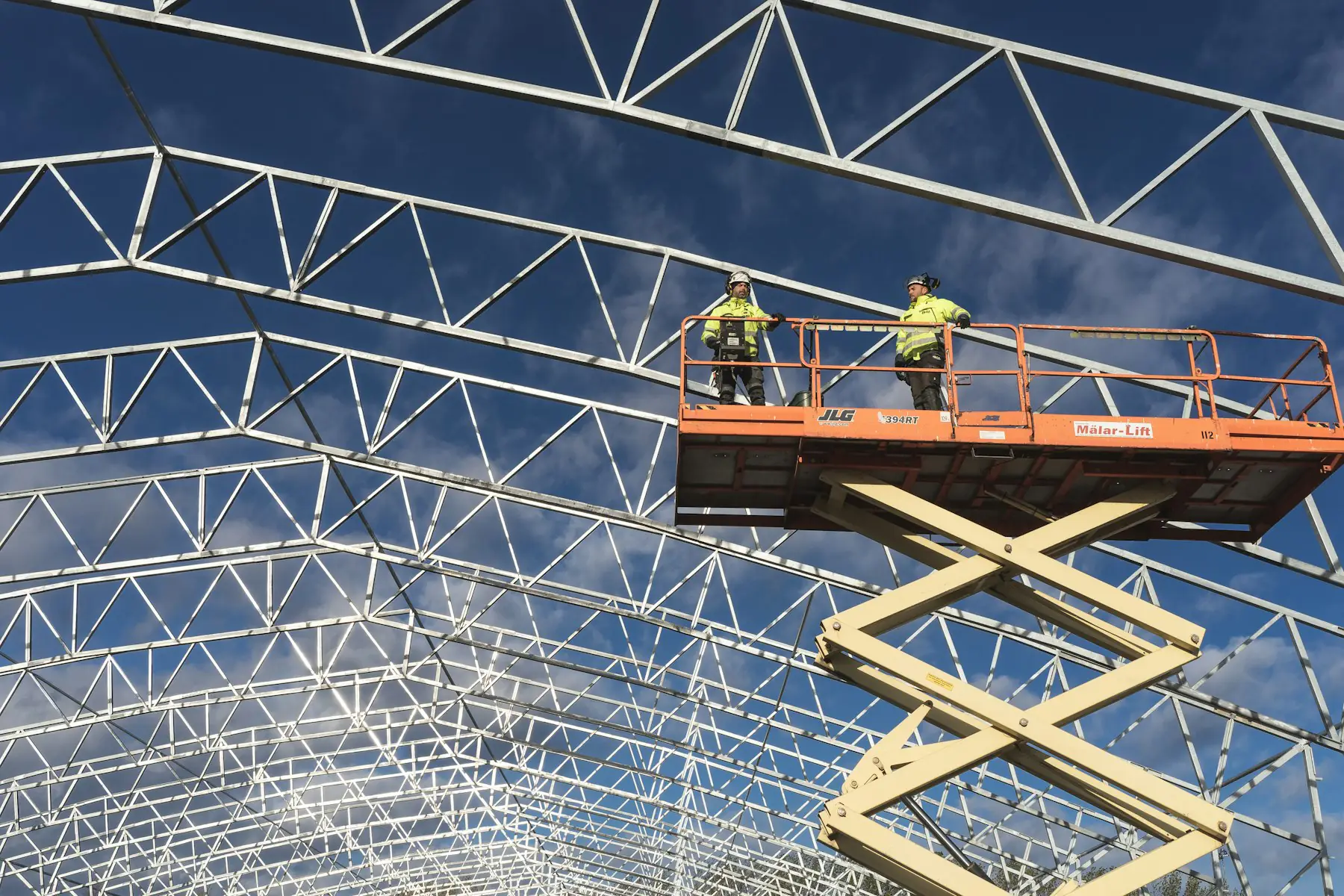
Erection is where a well-made building is finished or spoiled. Ask whether the manufacturer erects with its own crews and a supervising engineer, or subcontracts to whoever is available near your site. Ask for the erection sequence of a recent building, the safety record and the safety management system, and whether every bolt is torqued and marked before the sheeting starts. A manufacturer who fabricates well but erects badly will give you a frame that is out of plumb, braced late and leaking at the laps.
6. Drawings and documentation
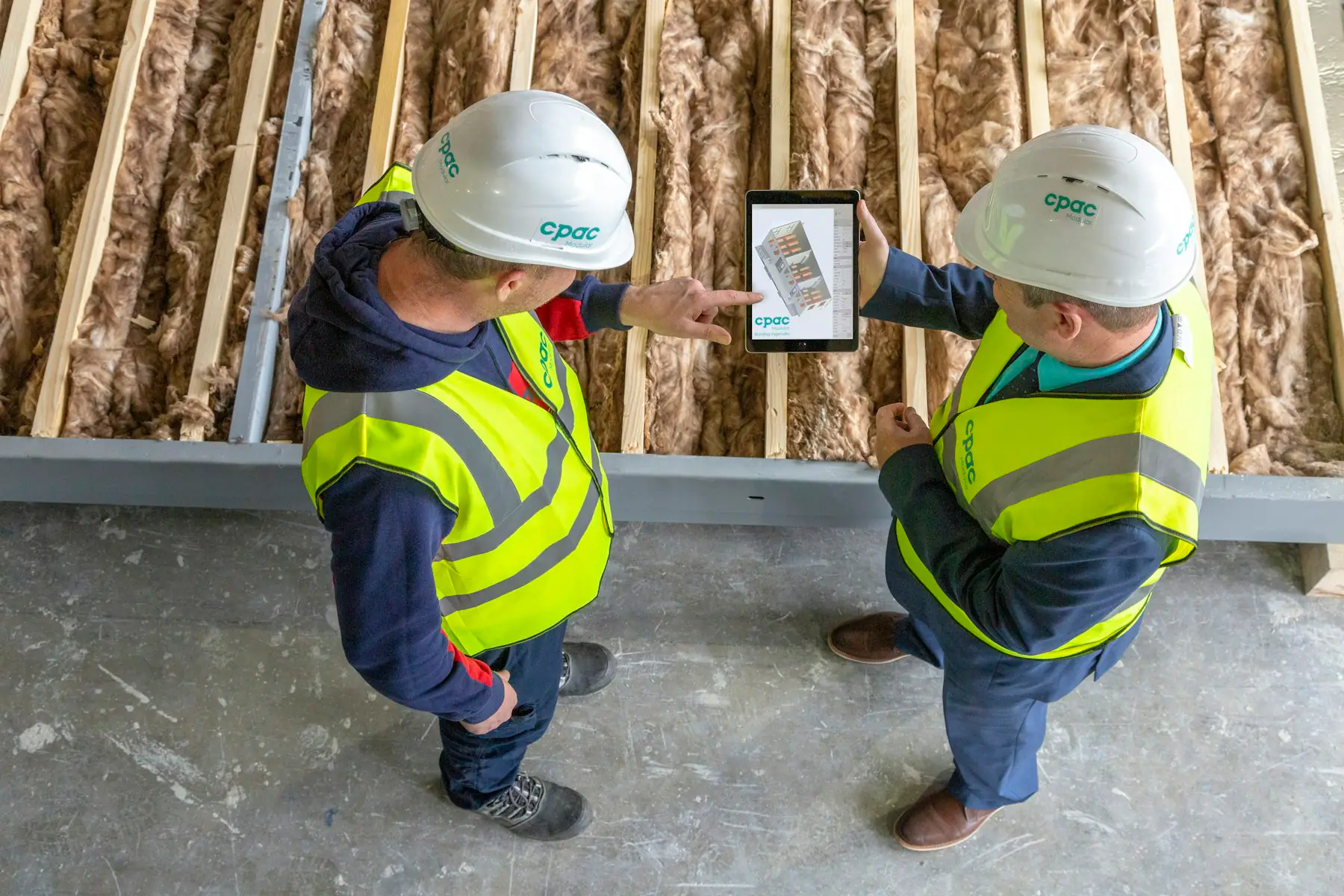
Ask what you will receive and when. Before fabrication: general arrangement drawings showing the frames, column positions, heights and openings, and the anchor bolt setting-out drawing the civil contractor needs. During the job: the erection drawings with every member marked. At handover: the as-built drawings, the mill and test certificates, the coating records and the structural stability certificate signed by the engineer. A manufacturer who hesitates over any of these is planning to leave you without them.
7. Programme and delivery
Ask for a programme, not a date: the weeks for design and approval, the fabrication slot, the dispatch plan and the erection sequence, with the gates that are yours marked. Then test it against what the manufacturer has done before. DSI designs, details, fabricates and ships a standard building in under six weeks from approved drawings; a manufacturer promising half that for a large crane shed is either guessing or planning to skip something. Ask too what happens if the programme slips, and whether the contract says so.
8. Quotation transparency
A PEB quotation should be itemised against a written specification: the frame type and bay spacing, the plate and sheeting grades, the coating system, the insulation, every accessory, the bolts, the erection, the transport and the exclusions, which usually include the foundations, the floor slab, the civil work and the services. The lowest quotation usually wins by thinning plate, sheeting, coating or bracing, and the difference only shows later. Ask every manufacturer to quote the same specification and compare the totals; where one is far lower, ask what was left out.
9. Warranty, support and after-sales
Ask what is warranted and for how long: the structure, the sheeting, the coating and the accessories, and what the warranty requires of you. Ask who you call when a gutter overflows two years on, and whether they will come. Ask whether the manufacturer will design the extension when the business grows, from the same drawings. A manufacturer who expects to see you again builds differently from one who does not.
10. Location and logistics
Steel is heavy, and the distance from the works to your site is freight, time and risk of damage. A manufacturer within a day’s haul can dispatch in phases, replace a damaged member quickly and send an engineer to site at short notice. Gujarat, with its ports, steel supply and industrial corridors, has become one of the main centres of PEB manufacturing in India, and a works in Rajkot serves Gujarat, Maharashtra, Rajasthan and Madhya Pradesh within a day. For a site further afield, ask how the manufacturer has handled distance before, and what it adds to the price and the programme.
Questions to ask every PEB manufacturer
Put these to every manufacturer on your shortlist, in the same words, and write the answers down beside each other.
- Which of design, fabrication, supply and erection do you do yourselves, and which do you subcontract?
- Which codes is the frame designed to, and what wind speed, seismic zone and soil capacity will you use for my site?
- Where is your factory, what machines does it run, and when can I visit?
- What plate grade and sheeting will you use, and can I see the mill certificates and the quality records for a recent building?
- How many buildings like mine have you delivered? Give me three clients I can call.
- Who erects the building, who supervises, and what is your safety record?
- What drawings do I get before fabrication, and what documents do I get at handover?
- Show me the programme for my building, stage by stage, with the dates that depend on me.
- Is the quotation itemised against a written specification, and what exactly is excluded?
- What is warranted, for how long, and who do I call after handover?
Red flags when choosing a PEB manufacturer
- A price per square foot before anyone has asked what the building is for, what it carries or where it stands.
- No factory to visit, or a factory that turns out to be a yard with a welding set.
- Design “to standard” with no wind speed, seismic zone or soil capacity named.
- A quotation that is far below the others with no specification to compare it against.
- No mill certificates, no quality records, no certifications, or certifications that cannot be verified.
- Erection “arranged locally” with no named supervisor and no sequence.
- Reluctance to give client references, or references that are all for buildings unlike yours.
- A single delivery date with no programme behind it, and no answer to what happens if it slips.
How to compare PEB quotations on a level specification
Two PEB quotations are only comparable when they describe the same building. The table lists the items that most often differ between quotations, what to check in each, and why it moves the price. Send every manufacturer the same brief and ask for each of these to be stated.
Design basis
- What to check
- Wind speed, seismic zone, soil capacity, crane and collateral loads, deflection limits.
- Why it changes the price
- A frame designed to lighter loads is cheaper and weaker.
Frame and bays
- What to check
- Frame type, clear span or multi-span, bay spacing, eave height.
- Why it changes the price
- Wider bays and taller eaves add steel; interior columns save it.
Plate and sheeting
- What to check
- Plate grade and thicknesses, sheeting grade, thickness and coating class.
- Why it changes the price
- Thinner plate and lighter sheeting are the commonest hidden savings.
Coating
- What to check
- Blast standard, primer, finish and dry film thickness; galvanised secondary members or not.
- Why it changes the price
- A thin coating is invisible on day one and expensive in year five.
Accessories
- What to check
- Insulation, ventilators, daylight panels, louvers, doors, gutters and downpipes, by count and specification.
- Why it changes the price
- Accessories left out of one quotation reappear as extras later.
Erection
- What to check
- Included or not; own crew or subcontract; crane and equipment; supervision.
- Why it changes the price
- Erection excluded can be a fifth of the building cost.
Transport
- What to check
- Included to site, or ex-works.
- Why it changes the price
- Freight on heavy steel over distance is a real line.
Exclusions
- What to check
- Foundations, floor slab, civil work, services, approvals.
- Why it changes the price
- Everyone excludes these; make sure everyone excludes the same ones.
Documents
- What to check
- GA and anchor bolt drawings, as-built drawings, certificates, stability certificate.
- Why it changes the price
- Documents cost the manufacturer effort and the owner nothing to ask for.
Programme and terms
- What to check
- Stage dates, payment stages, warranty, what happens on delay.
- Why it changes the price
- A short date with no programme is not a saving.
| Item | What to check | Why it changes the price |
|---|---|---|
| Design basis | Wind speed, seismic zone, soil capacity, crane and collateral loads, deflection limits. | A frame designed to lighter loads is cheaper and weaker. |
| Frame and bays | Frame type, clear span or multi-span, bay spacing, eave height. | Wider bays and taller eaves add steel; interior columns save it. |
| Plate and sheeting | Plate grade and thicknesses, sheeting grade, thickness and coating class. | Thinner plate and lighter sheeting are the commonest hidden savings. |
| Coating | Blast standard, primer, finish and dry film thickness; galvanised secondary members or not. | A thin coating is invisible on day one and expensive in year five. |
| Accessories | Insulation, ventilators, daylight panels, louvers, doors, gutters and downpipes, by count and specification. | Accessories left out of one quotation reappear as extras later. |
| Erection | Included or not; own crew or subcontract; crane and equipment; supervision. | Erection excluded can be a fifth of the building cost. |
| Transport | Included to site, or ex-works. | Freight on heavy steel over distance is a real line. |
| Exclusions | Foundations, floor slab, civil work, services, approvals. | Everyone excludes these; make sure everyone excludes the same ones. |
| Documents | GA and anchor bolt drawings, as-built drawings, certificates, stability certificate. | Documents cost the manufacturer effort and the owner nothing to ask for. |
| Programme and terms | Stage dates, payment stages, warranty, what happens on delay. | A short date with no programme is not a saving. |
What to look for on a factory visit
An hour at the works answers most of the questions above. Watch a member go from plate to paint: is it cut on a CNC machine or marked by hand, welded on an automatic line or by an operator with a stick, blasted and primed or wiped and painted? Look at the stock: is there plate on the floor, and does it carry a mill mark? Look at the records: ask to see the inspection sheet for a member that is being made that day. Look at the people: how many engineers, how many welders, how long they have been there. And look at the building you are standing in, because a PEB manufacturer who works under a bad roof is telling you something.
PEB manufacturers in Gujarat and across India
India’s PEB industry has grown with its warehousing, logistics and manufacturing, and the manufacturers are spread across the country, with concentrations around the industrial belts of Gujarat, Maharashtra, Tamil Nadu, Telangana and the National Capital Region. Gujarat has a particular depth: steel supply through its ports, a long tradition of engineering workshops in Rajkot and Ahmedabad, and industrial corridors that have needed thousands of sheds. The result is a market with every kind of supplier in it, from integrated works to one-room traders, which is why the checks in this guide matter more here than anywhere.
Where the manufacturer is based matters less than what it does under its own roof. A works a day away that designs, fabricates and erects will serve you better than a nearby trader who does none of the three.
How Darshan Steel Infrastructure measures up
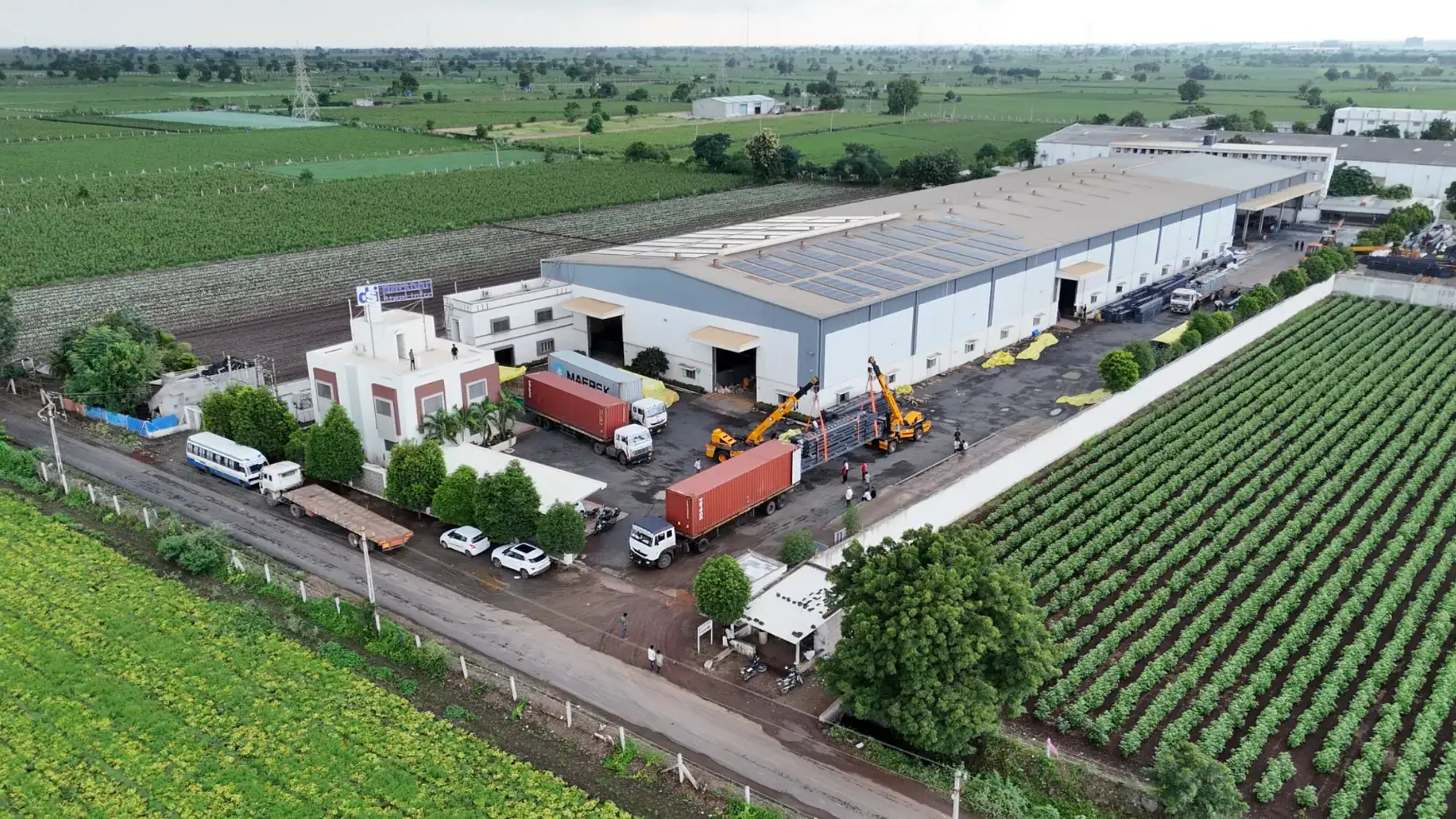
Darshan Steel Infrastructure is a PEB manufacturer at Chhattar, Rajkot, Gujarat, that does all four things under its own roof: in-house structural engineering and detailing, fabrication on CNC cutting, automatic welding, shot blasting and painting lines in a 15,000 sq m works with 15,000 MT of annual capacity, supply of the complete building system, and erection by its own teams with a supervising engineer. Frames are cut from 345 MPa plate and roofed with S550 sheeting, the shop runs to management systems certified to ISO 9001, 14001 and 45001 by TÜV SÜD, and every member carries inspection records against its mark number. DSI has delivered 230+ projects across India since 2018, and the works is open to visit by appointment.
If you are shortlisting manufacturers, send us the brief you are sending everyone else. An engineer will come back within one working day with the framing approach, and the quotation will be itemised against a written specification so it can be compared with the others on a level.